Paint protection film typically lasts 5-10 years under normal driving conditions, while premium self-healing films often last 10–12 years when professionally installed and properly maintained. Replacement is generally required when the film shows yellowing, edge lifting, cracking, hazing, or reduced self-healing and gloss performance. In real-world use, lifespan is driven more by environmental exposure, installation quality, and maintenance habits than by mileage alone.
Understanding Paint Protection Film Lifespan in Real Driving Conditions
Paint protection film is a transparent layer of thermoplastic polyurethane (TPU) designed to absorb physical impact and resist chemical and UV damage before it reaches a vehicle’s clear coat. Under normal driving conditions, meaning daily commuting, mixed highway and city use, and seasonal weather exposure, it provides consistent protection for several years before degradation becomes noticeable.
In practice, PPF does not “expire” on a fixed date. Instead, it undergoes gradual material fatigue. UV radiation slowly breaks down the topcoat, heat cycling expands and contracts the adhesive layer, and environmental contaminants bond to the surface over time. These changes accumulate long before obvious visual failure appears.
Most vehicles begin to show early-stage aging between years 5 and 8, especially in high-impact areas such as bumpers, hood leading edges, and side mirrors.
Expected Lifespan by Film Quality and Technology Tier
Different film constructions produce significantly different real-world outcomes. While all modern PPF uses TPU as a base, variations in topcoat chemistry, adhesive systems, and UV inhibitors create distinct durability ranges.
| Film Category | Expected Lifespan | Real-World Behavior | Common End-of-Life Signs |
| Entry-level TPU | 3–5 years | Faster clarity loss, limited UV resistance | Yellowing, dull finish |
| Mid-tier PPF | 5–7 years | Balanced durability and optical stability | Edge lift, mild haze |
| Premium self-healing TPU | 7–12+ years | High gloss retention, strong UV stability | Adhesive fatigue, reduced self-healing |
Higher-end films don’t eliminate aging; they slow it and preserve appearance longer under stress. The key difference is how long the film maintains “like-new” optical performance.
What Actually Determines How Long PPF Lasts
1. UV exposure and environmental intensity
Sunlight is the primary long-term degradation factor. UV exposure leads to:
- Gradual yellowing, especially on white and light-colored paint
- Breakdown of surface gloss and clarity
- Hardening of the film over time
Vehicles parked outdoors full-time degrade significantly faster than garage-kept vehicles, even with identical film.
2. Driving environment and usage conditions
Real-world driving conditions vary widely, and each affects lifespan differently:
- Highway driving increases stone chip impact frequency
- Urban driving introduces continuous micro-abrasion from dust and debris
- Construction-heavy routes accelerate surface etching
- Winter conditions introduce salt and freeze-thaw stress on edges
These factors explain why front bumpers and hoods typically require replacement first.
3. Installation quality (critical performance factor)
Even a premium film will underperform if installed incorrectly. Common installation-related failure points include:
- Contamination trapped beneath the film during installation
- Poor edge wrapping that allows lifting over time
- Insufficient adhesive bonding due to improper surface prep
- Inadequate curing time before environmental exposure
A properly installed film often outlasts a poorly installed premium film by several years.
4. Maintenance habits and cleaning practices
Maintenance directly influences long-term clarity and durability:
- Harsh alkaline cleaners break down the topcoat prematurely
- Automatic brush washes introduce swirl marks and micro-tears
- Long-term contamination exposure leads to staining and bonding
- Improper drying techniques can scratch or haze the surface
Consistent, gentle washing significantly extends usable lifespan.
Signs Paint Protection Film Needs Replacement
Visual degradation indicators
- Yellowing or discoloration on paint surfaces
- Cloudiness or a hazy appearance under direct sunlight
- Loss of gloss compared to adjacent unprotected paint
Adhesion and structural issues
- Corner lifting or edge separation
- Air bubbles or moisture intrusion beneath the film
- Shrinkage or tension lines along curved panels
Performance decline symptoms
- Reduced hydrophobic behavior (water no longer beads properly)
- Loss of self-healing response under heat
- Increased staining from environmental contaminants
When multiple symptoms appear simultaneously, replacement is typically more cost-effective than attempting localized repairs.
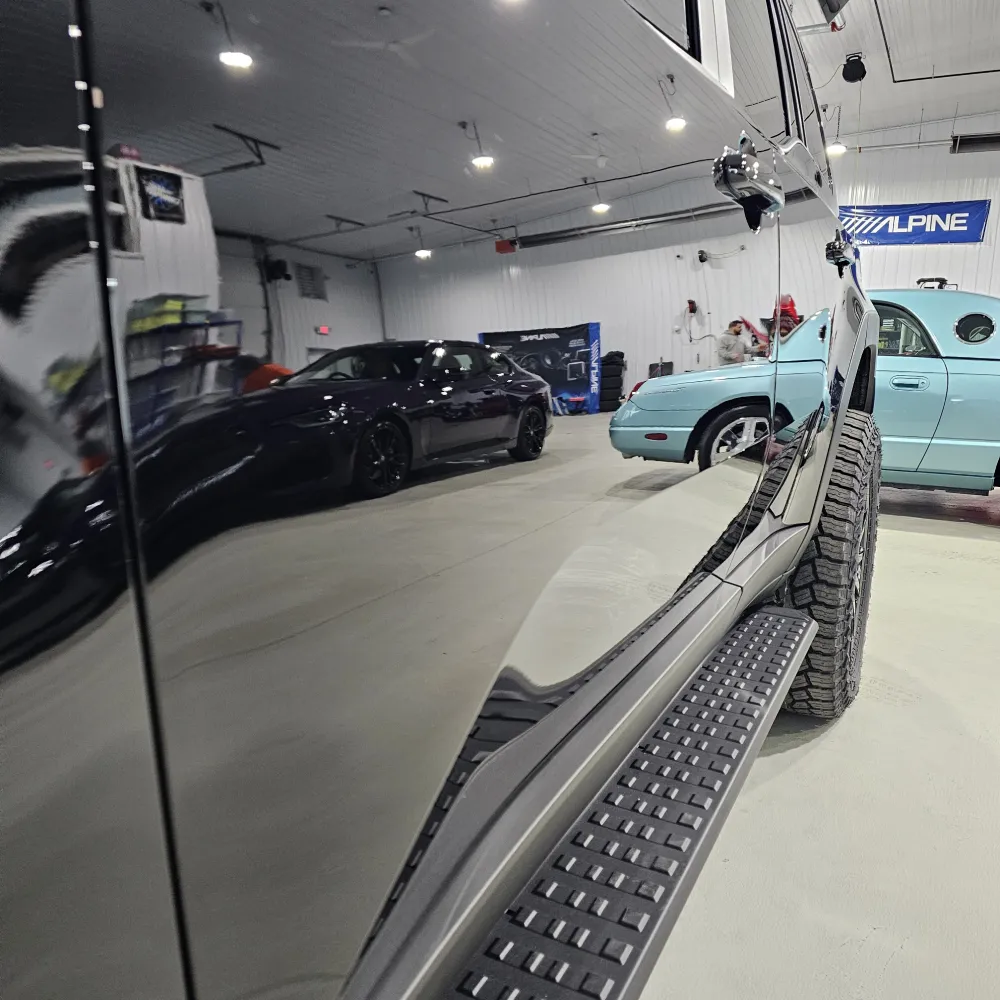
Real-World Wear Patterns Across Vehicle Surfaces
PPF does not degrade evenly across a vehicle. Wear is highly location-dependent:
- Front bumper and hood: highest impact zone, fastest degradation
- Side mirrors: constant debris exposure, frequent micro-pitting
- Rocker panels: road splash and salt exposure
- Doors and roof: slower wear, mostly environmental aging
In real-world service conditions, technicians often observe that only certain panels require replacement, while others remain fully functional.
In mixed seasonal environments, such as those commonly seen in PPF in New Jersey service regions, vehicles often experience accelerated front-end aging due to road salt exposure, freeze-thaw cycles, and year-round UV variability.
Environmental and Regional Factors That Accelerate or Extend PPF Lifespan
PPF lifespan is heavily influenced by macro-environmental conditions that vary significantly across geographies and levels of climate exposure.
High-acceleration environments
Certain conditions systematically shorten film longevity:
- High UV index regions (accelerated oxidation and yellowing)
- Cold climate zones with road salt exposure (edge degradation and adhesive stress)
- Urban construction corridors (constant airborne particulate abrasion)
- High humidity environments (increased risk of edge contamination and adhesive breakdown over time)
Moderate or protective environments
Conversely, lifespan is extended in conditions such as:
- Garage-stored or covered parking use
- Low UV exposure climates
- Minimal winter road treatment exposure
- Low-dust rural driving environments
Seasonal stress cycling effect
One of the most underappreciated drivers of degradation is thermal cycling, repeated expansion and contraction of both the film and adhesive layers. Regions with strong seasonal temperature variation experience more pronounced edge wear and micro-lifting over time.
This is why identical film systems can show significantly different lifespans across different regions, even when installation quality is consistent.
Realistic Lifespan Expectations in Daily Use
While marketing materials often highlight maximum durability, real-world performance depends heavily on how and where the vehicle is driven.
- Light-use, garage-kept vehicles: 8–12+ years possible
- Average commuter vehicles: 5–8 years of optimal performance
- High-exposure daily drivers: 4–6 years before noticeable decline
Importantly, PPF often remains physically intact long after its protective and aesthetic performance has declined.
Core Paint Protection Film Components
Thermoplastic Polyurethane (TPU):
A flexible polymer used as the base structure of modern paint protection films, valued for elasticity and impact resistance.
Self-healing topcoat:
A heat-reactive surface layer that allows minor scratches and swirl marks to disappear over time.
UV stabilizers:
Additives that slow oxidation and reduce yellowing caused by prolonged sun exposure.
Pressure-sensitive adhesive (PSA):
A bonding layer designed to adhere firmly to paint while allowing clean removal during replacement.
Common Misconceptions About Paint Protection Film
Myth 1: PPF lasts indefinitely if the surface looks fine
Even when visually intact, internal adhesive and polymer degradation continue over time.
Myth 2: Warranty equals full real-world lifespan
Warranties typically cover manufacturing defects, not long-term optical clarity or surface performance.
Myth 3: Replacement is only necessary when peeling is visible
Peeling is a late-stage failure sign. Performance degradation occurs well before that point.
Installation Quality and Professional Standards
Installation quality is one of the most important predictors of long-term durability. Proper application involves:
- Multi-stage paint decontamination
- Controlled installation environment (dust-free conditions)
- Precision panel fitting and edge wrapping
- Correct curing time before exposure to moisture or heat
Professional providers specializing in paint protection film in New Jersey emphasize controlled installation processes because even minor contamination or poor edge sealing can shorten the lifespan significantly.
A properly installed system not only lasts longer but also maintains better optical clarity throughout its service life.
Maintenance Practices That Extend Film Longevity
- Wash regularly using pH-neutral car shampoo
- Avoid automatic brush car washes entirely
- Remove organic contaminants quickly (bird droppings, sap, insects)
- Use microfiber drying methods to prevent abrasion
- Schedule periodic professional inspections for edge integrity
These practices help preserve both appearance and protective function, especially during the later years of the film’s lifespan.
Professional Service Considerations and Inspection Reality
In real-world detailing environments, film degradation is often detected before customers notice visible issues. Technicians frequently identify early-stage adhesive fatigue or surface dulling through angled lighting inspection and edge testing.
Providers offering New Jersey paint protection film services often emphasize these inspection methods because they allow proactive replacement decisions rather than reactive repairs after failure has already progressed.
This approach helps maintain consistent protection rather than waiting for a visible breakdown.
Final Takeaway
Paint protection film typically lasts 5 to 10 years under normal driving conditions, with premium systems often lasting longer when properly installed and maintained. At Ceramic Pro NWNJ, the most accurate indicator for replacement is not age alone, but visible changes in clarity, adhesion, and overall surface performance.
For professional evaluation, installation, or replacement guidance, contact us today to assess your vehicle’s current protection system and ensure long-term paint preservation.
Frequently Asked Questions
What shortens the lifespan of paint protection film the most?
UV exposure, poor maintenance practices, and low-quality installation.
How do I know if my PPF is failing?
Look for haze, yellowing, edge lift, and reduced surface slickness.
Is paint protection film worth it long term?
Yes, it helps preserve factory paint and reduces repainting costs over time.
Can PPF survive harsh weather conditions?
Yes, but lifespan is reduced in environments with extreme UV, salt, or temperature fluctuations.